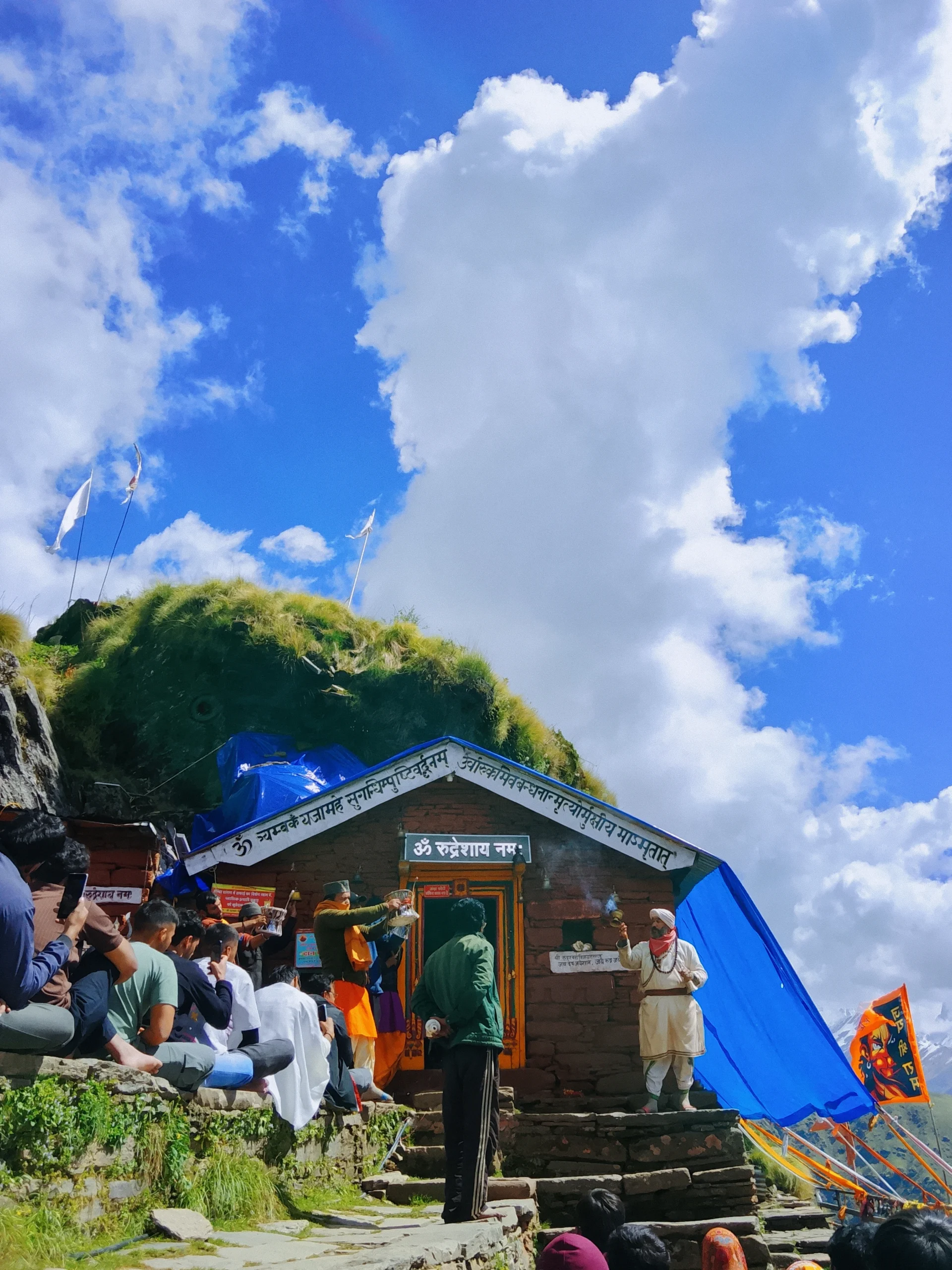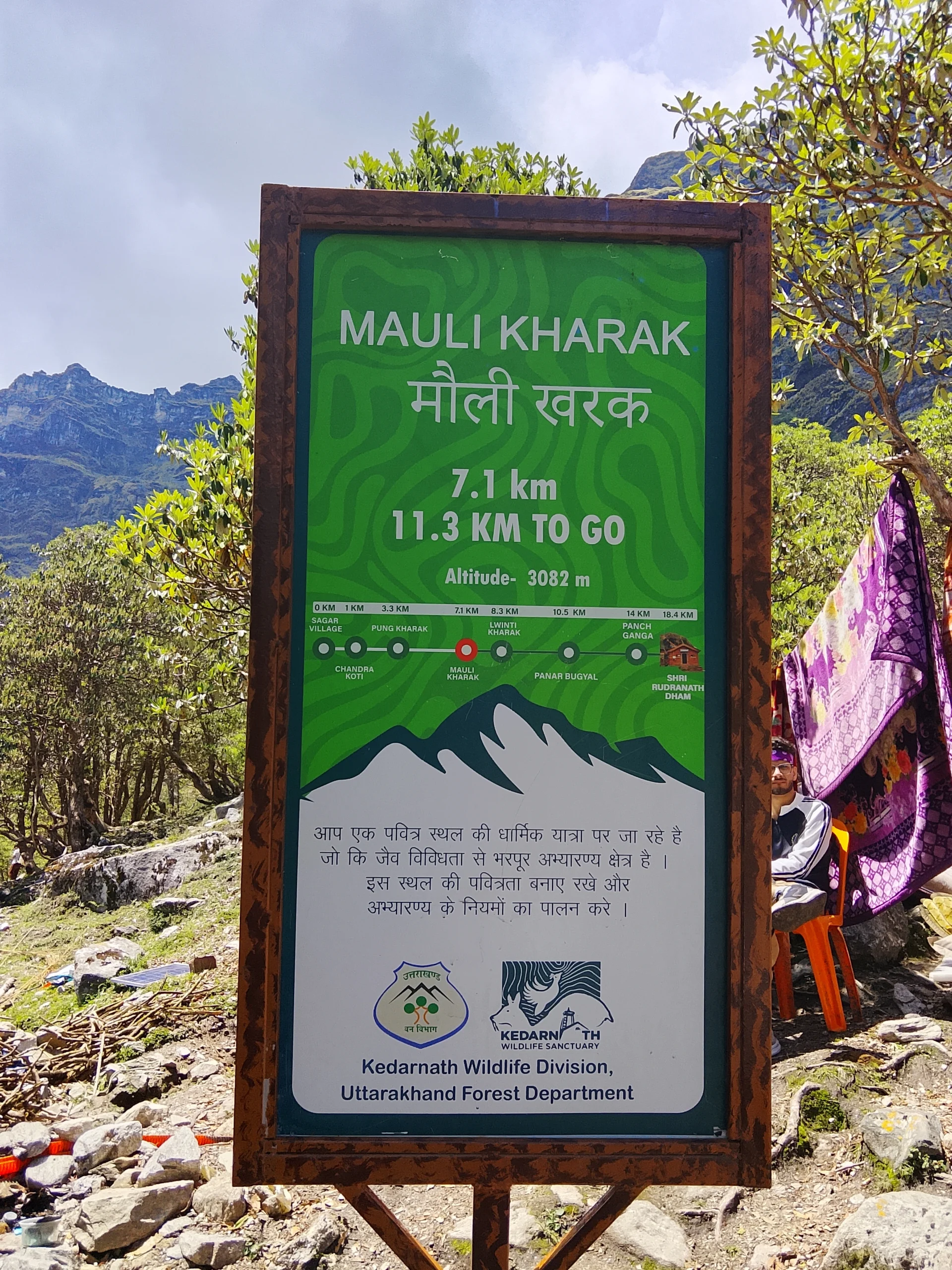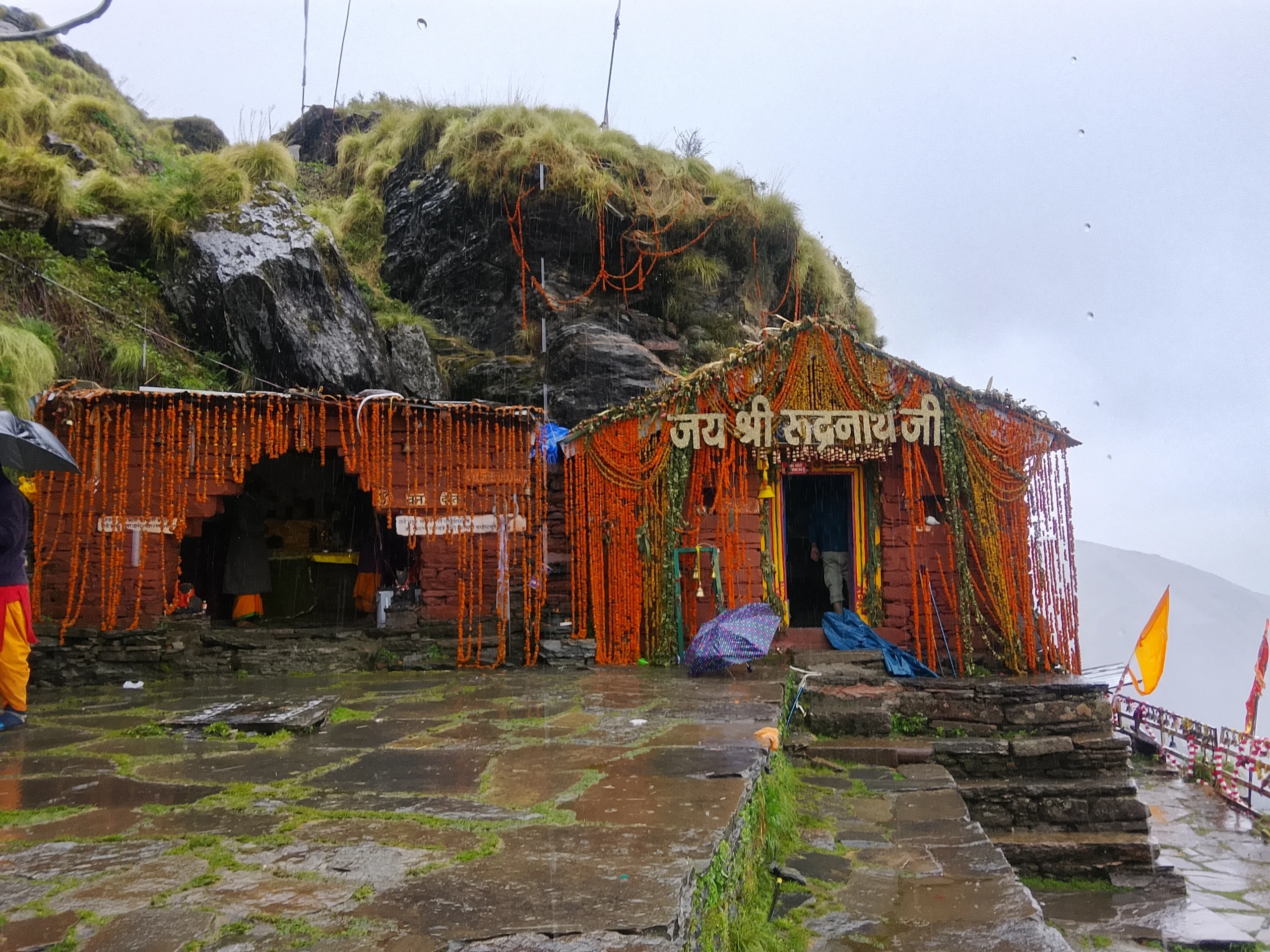
This is the temple where the face (mukh) of Lord Shiva is worshipped, the fourth shrine of the Panch Kedar circuit and by every measure the hardest to reach. There is no road that comes close, no helicopter service, no pony stand. What waits instead is one of the great Himalayan walking pilgrimages: nearly twenty kilometres each way from the village of Sagar, climbing through oak and dwarf rhododendron forests into some of the most expansive alpine meadows in Garhwal, Pung Bugyal, Lyuti Bugyal and the vast rolling grassland of Panar where the trail feels less like a path and more like walking across the sky.
And then, at 3,600 metres, set in a natural rock alcove beneath the gaze of Nanda Devi, Trishul and Nanda Ghunti, stands the temple itself small, ancient and impossibly serene. Here Shiva is worshipped as Neelkanth Mahadev, a swayambhu (self-manifested) face of stone and the holy Vaitarani the river of salvation, which souls must cross after death flows beside the shrine. Pilgrims come here not only for darshan but to perform pind daan for their ancestors; tradition holds that an offering made at Rudranath equals a hundred million offered at Gaya.
This is not the yatra you squeeze into a weekend. It is the one you prepare for, walk slowly and remember for the rest of your life.