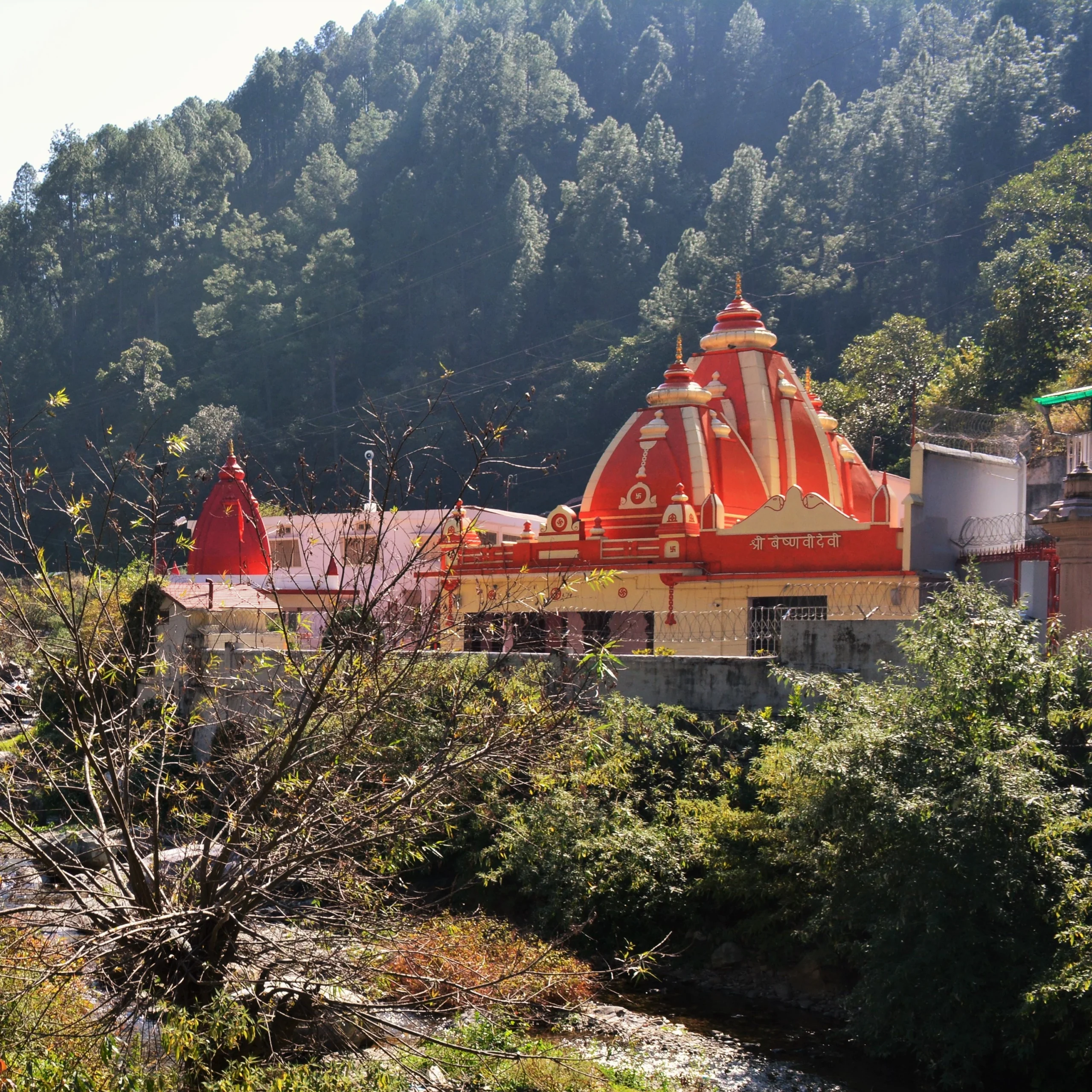
I finally went to Kainchi Dham
And here’s everything nobody tells you
They say you don’t choose Kainchi Dham but Kainchi Dham chooses you. I used to roll my eyes at that line, right up until I found myself on a winding mountain road at 5 in the morning, headlights cutting through pine forest, with nothing booked and no real plan beyond a feeling I couldn’t explain.
Kainchi Dham sits at one of those bends on the Nainital-Almora road where the highway scissors back on itself, which is literally where the name comes from (kainchi means scissors). It’s a modest ashram beside a cold mountain stream, about 17–18 km from Nainital at roughly 1,400 metres. On paper, it’s just a Hanuman temple founded by a sadhu called Neem Karoli Baba in 1964. In reality, it’s one of the most magnetic spiritual spots in India, the kind of place that quietly pulled Steve Jobs, Mark Zuckerberg and half of Bollywood and Indian cricket into its fold.
This is my account of the trip: what it felt like, what it cost, what went wrong and what I’d do differently.
The History
The story begins in 1962, when Neem Karoli Baba “Maharaj Ji” to his devotees arrived at this spot wrapped in his famous blanket and simply lay down on a wooden platform. Locals say he chose the site deliberately; it’s believed to be a place where sages had meditated for generations. A local resident, Purnanand, donated the land and in June 1964 the first Hanuman temple was inaugurated. That date 15 June is still celebrated every year as the ashram’s foundation day.
Maharaj Ji spent much of his final decade here before taking mahasamadhi in 1973. He left behind no organisation, no succession plan, no doctrine just ashrams, Hanuman temples and an instruction to love everyone, serve everyone, remember God.
The complex today holds the Hanuman temple, shrines to Shiva and to Maharaj Ji himself, a small bookshop and rooms for a handful of devotees. What struck me most: despite the fame, it has resisted becoming a brand.
The official trust (shreekainchimandirtrust.org) even warns that no agent is authorised to take bookings or donations on its behalf, something to remember when touts approach you.
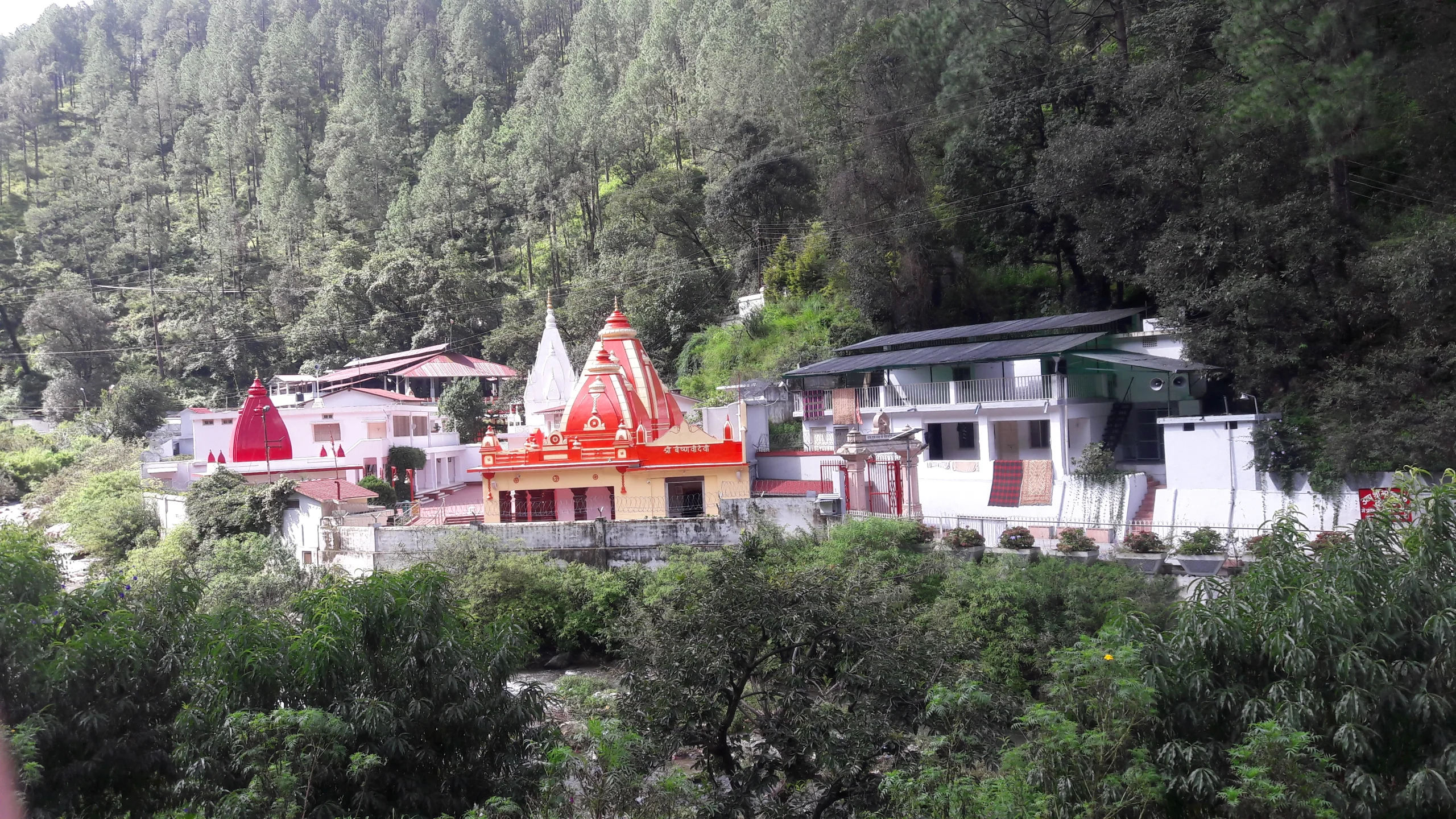
Why Is It So Famous?
Two forces made Kainchi Dham a global name.
The first is faith. Ask anyone in the queue why they came and you’ll hear the same thing: wishes get fulfilled here. Jobs, marriages, health, clarity of mind. Whether or not you believe it, the conviction in that queue is real and oddly contagious.
The second is its unbelievable guest list.
Steve Jobs travelled to this region in 1974 hoping to meet Maharaj Ji the Baba had already passed, but his teachings reshaped Jobs’ thinking. Four decades later, when Facebook was wobbling through a difficult phase, Jobs’ advice to Mark Zuckerberg was simple: go to that temple in India. Zuckerberg came to Kainchi Dham in 2015 and later spoke publicly about how the visit helped him.
Julia Roberts became a devotee of Maharaj Ji, Virat Kohli and Anushka Sharma have visited for blessings.
The result is surreal, a tiny Himalayan ashram that half of Silicon Valley knows by name.
But here’s the part influencers skip: fame has a cost. Long-time devotees on forums describe the place as far more crowded and commercialised than a decade ago, stays around the ashram can cost 3-4x what you’d pay in Kathgodam and parking and cab rates are inflated.
The darshan itself is highly managed: you move in a flow, take blessings, keep moving, because hundreds are behind you. I won’t pretend it felt like a silent retreat. And yet sitting by the stream afterwards, watching the water and the hills, something in me went quiet anyway. Go with realistic expectations and you’ll find your moment. Go expecting an empty monastery and you’ll be disappointed.
How I Got There (and what it actually costs)
- By train: I took the overnight train from Delhi to Kathgodam, the nearest railhead (~35-38 km from the ashram, about 1-1.5 hours by road). This is the smartest option. Kathgodam is also where you should sleep if you’re on a budget.
- Kathgodam to Kainchi Dham: Shared taxis and buses towards Nainital/Bhowali pass right by the ashram (₹100–150). A private cab should run ₹1,500–2,500 anything quoted above that is a tourist tax; negotiate hard or ask your hotel to arrange one. My biggest regret was not doing this and overpaying the first driver who smiled at me.
- By road from Delhi: ~320 km, roughly 8-9 hours via Haldwani → Bhimtal → Bhowali. The last stretch is hill driving don’t attempt it at night unless you’re genuinely confident on mountain roads.
- By air: Pantnagar Airport (~70 km), then taxi.
- Parking: If you’re driving yourself, expect around ₹200 for a few hours near the temple; it fills fast on weekends, so arrive early or park farther out and walk.
- Timings: Gates open around 6 AM (7 AM in winter) and close around 6-7 PM. Morning aarti happens around 7–7:30 AM there’s no rigidly published time, so reach by 6:30 AM to be safe. That early aarti, with temple bells and cold river air, was the single best moment of my trip.
The Best Time to Visit
The standard advice is March-June and September-November. But a local friend gave me the version nobody blogs about: Monday mornings in late November or early December are the sweet spot the aarti crowd is thin, the air is crisp and darshan is unhurried. Avoid festival days, long weekends and (obviously) 15 June unless the mela is your reason for coming. Monsoon (July-August) brings landslide risk on the Kumaon roads,deep winter can mean fog and slower travel.
Carry cash, UPI signal is unreliable up there and dress modestly with a warm layer, because the temperature drops the moment the sun slips behind the ridge.
The 15 June Bhandara
Every 15 June, the ashram celebrates its Pratishtha Diwas with a massive bhandara,a free community feast served to anyone who comes, honouring Maharaj Ji’s rule that nobody who reaches his door leaves hungry.
Tens of thousands of devotees converge on this small valley in a single day. Vehicles are restricted, hotels in Nainital, Bhimtal and Bhowali sell out weeks in advance and you’ll likely walk the final stretch.
A devotee I met described it perfectly: “The crowds are enormous, but so is Maharaj Ji’s presence the faith of that many people in one place is its own experience.” If you go, go for collective devotion, not for peace and quiet.
What Else to See Around (My 2-Day Loop)
– Ghorakhal (5 km), the Golu Devta temple, draped in thousands of brass bells and handwritten petitions. Strangely moving.
– Bhimtal (17 km), boating on the lake, far calmer than Nainital
– Nainital (18 km), Naini Lake, Naina Devi temple, Mall Road. Great for an evening, but parking is painful (budget ~₹600/day) walk instead.
– Sattal (20 km) & Naukuchiatal (25 km) seven lakes and a nine-cornered lake, kayaking, paragliding, birdsong
– Mukteshwar (40 km), Himalayan panoramas and the cliff at Chauli Ki Jali.
– Kasar Devi, Almora (~50 km), the other Kumaon sanctuary beloved of seekers, from Swami Vivekananda to Bob Dylan. Pair it with Kainchi and you have a genuinely meaningful two-day spiritual circuit.
Also worth knowing: Maharaj Ji established earlier, quieter ashrams in the region that devotees say retain the stillness Kainchi has partially lost ask locally and consider adding one to your route.
Final Word
Kainchi Dham didn’t give me a miracle in any cinematic sense. What it gave me was an early-morning aarti I’ll never forget, a bowl of overpriced hilltop Maggi that tasted like peace and the strange certainty that I’d been called the same word every devotee uses, and now I understand why. If the thought of this place keeps returning to you, that’s your sign. Book the Kathgodam train, set the alarm for 5:30, and just go.