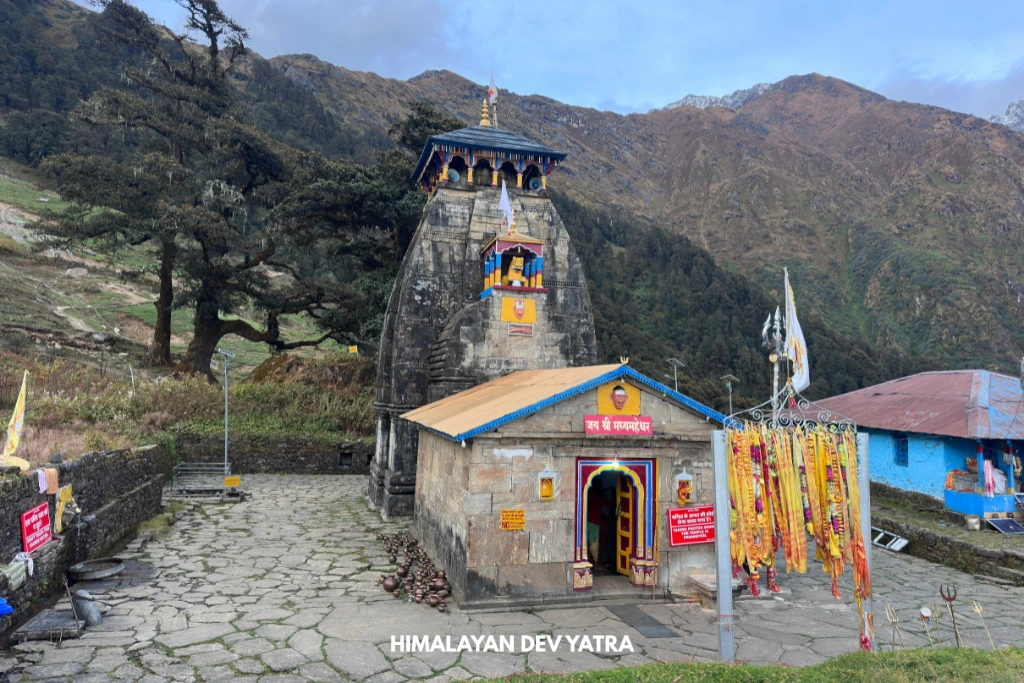
Madh Maheswar Temple
Download Itinerary

Madmaheshwar Yatra

Ransi, Uttarakhand

Region

Uttarakhand

Base Camp

Ransi

Altitude

3,497 m.

Duration

4 D / 3 N

Duration

May, June - Sept, Oct

Walking Difficulty

Moderate

Walking Distance

32 KM

Wheelchair

Not Available

Overview

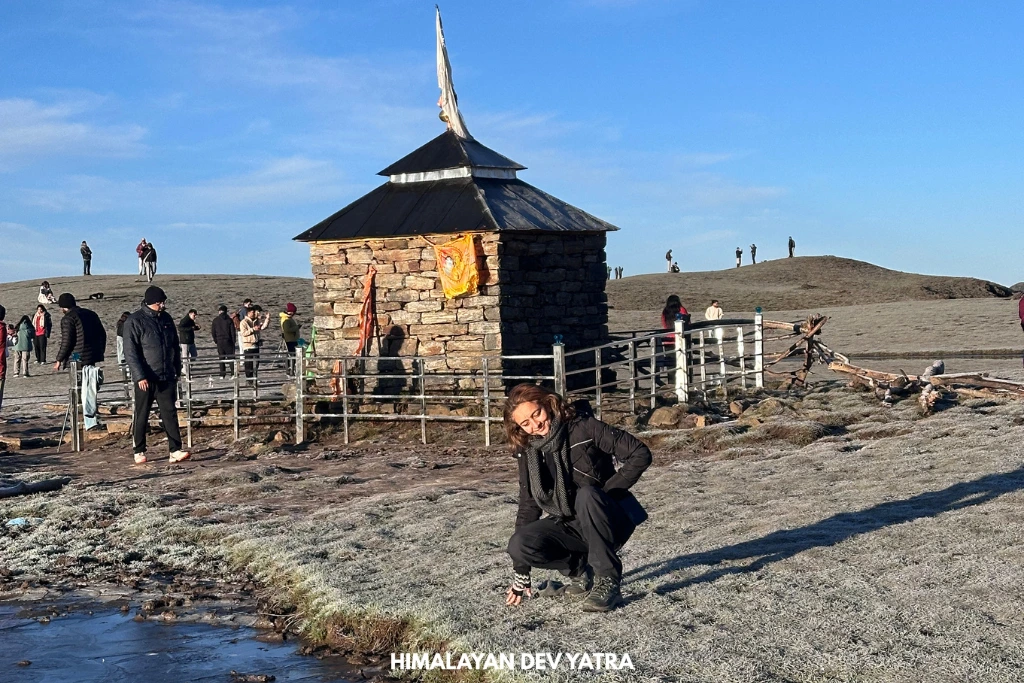
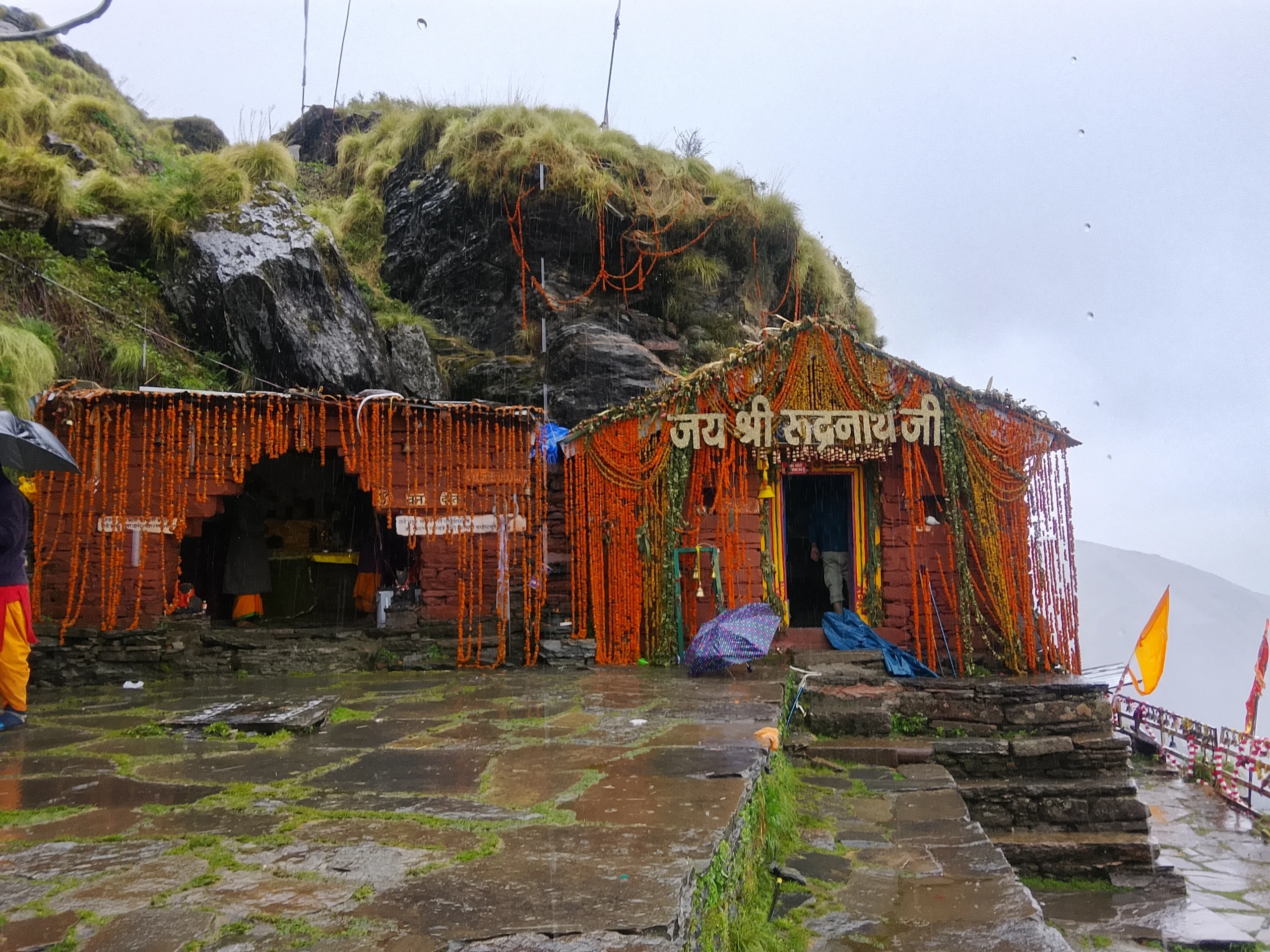
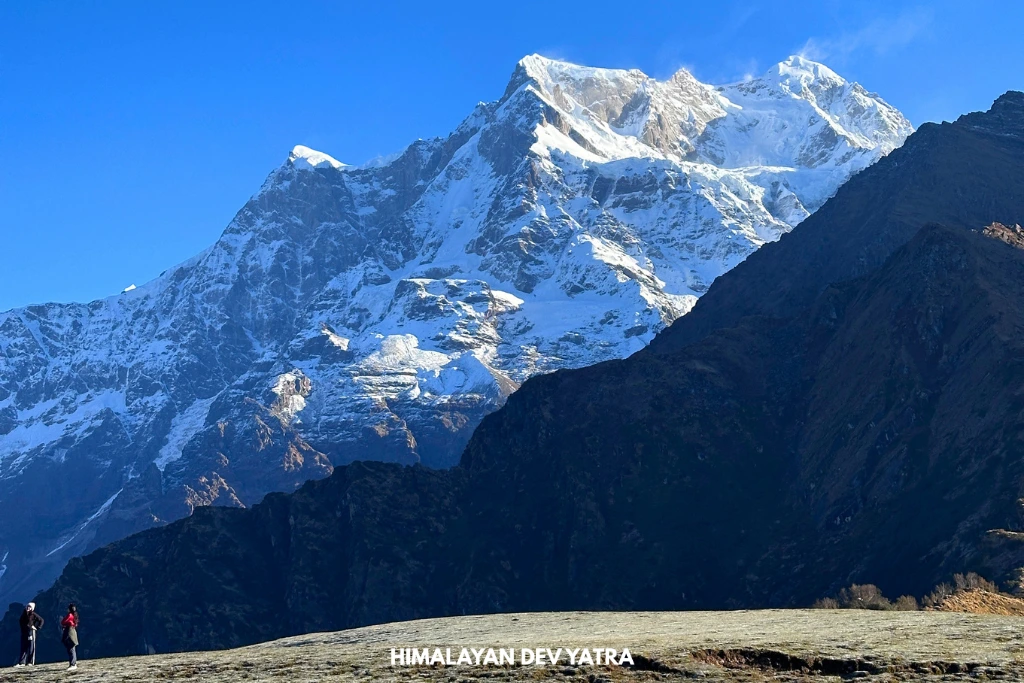
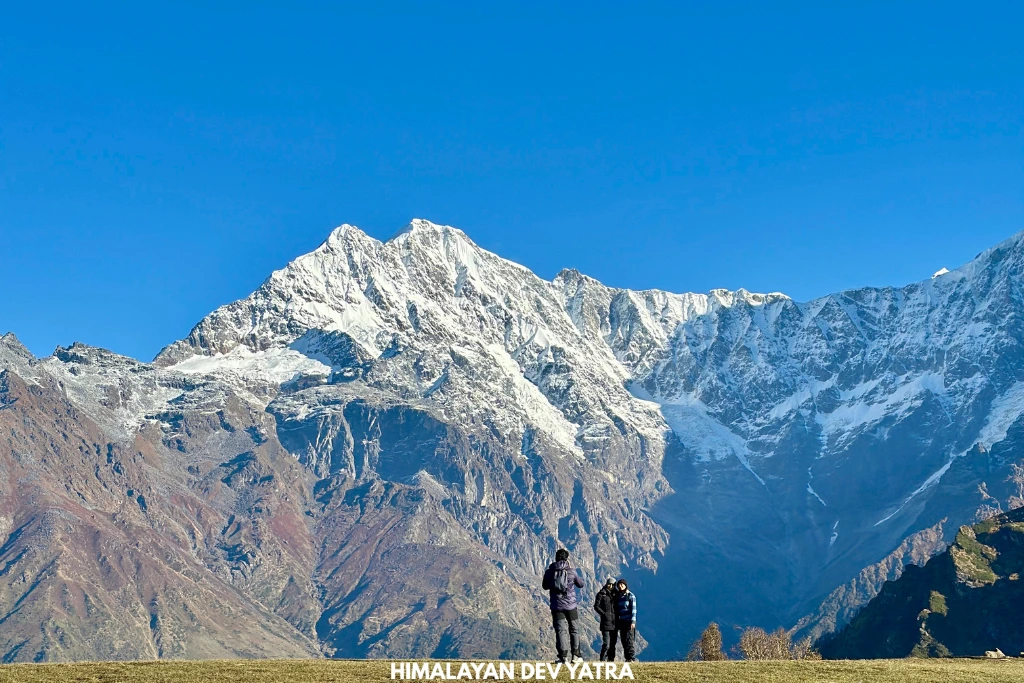
Hidden in a high meadow of the Garhwal Himalayas, ringed by the snow walls of Chaukhamba, Neelkanth and Kedarnath peaks, stands the second of the sacred Panch Kedar the temple where the navel of Lord Shiva is worshipped. 

At 3,497 metres, Madmaheshwar is the quietest and least commercialised of the five Kedars. There are no helicopter queues here, no pony traffic jams, no loudspeakers.

What there is: a 16-kilometre trail that begins in terraced villages, plunges through the rhododendron and oak forests of the Kedarnath Wildlife Sanctuary, follows the singing Madmaheshwar Ganga upstream and finally opens onto a green alpine bowl where an ancient stone temple has held its ground against the snows for centuries.

This is a yatra in the truest sense: part pilgrimage, part trek, entirely transformative. The route from Ransi through Gaundhar and Bantoli climbs nearly 5,000 feet, demanding honest effort. But every step is repaid at Buda Madmaheshwar, the tiny shrine above the main temple, where the entire Chaukhamba massif rises before you like a wall of white fire, arguably the grandest mountain view of any Panch Kedar.
Day-by-day Itinerary

Day 1

Rishikesh to Ransi and Trek to Gaundhar

The journey begins along the holy rivers following the Ganga to Devprayag, where she is born from the meeting of Bhagirathi and Alaknanda, then tracing the Alaknanda to Rudraprayag before turning up the Mandakini valley past Agastmuni and Ukhimath (the winter seat of the Kedars).

From the roadhead at Ransi, a short descent through fields and forest brings you to the village of Gaundhar, where the Madmaheshwar Ganga and Markanda Ganga meet. Overnight in a village homestay your first taste of Garhwali hospitality, hot dal-bhat and a sky full of stars.

Day 2

Gaundhar to Madmaheshwar Temple

The big climb. The trail winds through the dense forests of the Kedarnath Wildlife Sanctuary oak, deodar and rhododendron that blaze crimson in spring crossing the hamlets of Lower and Upper Bantoli, where the valley narrows and the gradient sharpens.

The final stretch is a stone-stepped ascent that tests the legs and rewards the spirit: suddenly the forest opens, the meadow appears and the ancient temple of Madmaheshwar stands before you, with Chaukhamba towering behind it. Evening aarti at the temple oil lamps, mountain cold and chants echoing off snow peaks is an experience no photograph survives. Overnight near the temple.

Day 3

Madmaheshwar to Buda Madmaheshwar and decsend to Gaundhar

Wake before dawn this is the day of days. A steep 2 km climb above the main temple leads to Buda (Vriddha) Madmaheshwar, a small weathered shrine set in an open alpine meadow. From here, the entire Garhwal Himalaya performs for you: Chaukhamba I–IV, Kedarnath, Neelkanth, Thalay Sagar and Kedar Dome in one unbroken panorama, often floating above a sea of clouds at sunrise.

Two small glacial ponds lie nearby, on still mornings the peaks reflect in them perfectly. Descend back to the temple for a final darshan, then begin the long, knee-testing return through the sanctuary forests to Gaundhar. Overnight homestay.

Day 4

Gaundhar to Ransi and Drive to Rishikesh/Haridwar

A gentle morning descent to Ransi and the drive back down the Mandakini and Alaknanda valleys. You'll reach Rishikesh/Haridwar by evening dusty, tired and quietly different from the person who left.

Inclusion & Exclusion

INCLUSION

  • Stay: 2 nights in Gaundhar (dormitory), 1 night in Madhmaheswar (dormitory)
  • Meals: 3 dinners and 3 breakfast
  • Transport: Transportation from Rishikesh to Ransi and back is included.
  • Forest Entry and Permits: All required fuel charges, tolls, forest entry fees, and permits are covered.
  • Trek Staff: A qualified driver and guide.
  • Emergency Kit: First aid medical kits, oxygen cylinders, and stretchers are provided for safety.

EXCLUSION

  • Meals during Transfer: Meals are not included while traveling to and from the trek starting points.
  • Emergency Evacuations: Any charges related to emergency evacuation are not included
  • Personal Expenses: Any meals or accommodations outside of the provided itinerary or additional services not listed in the inclusions.
  • Personal Luggage Carrying: Charges for mules or porters to offload personal luggage are not included in the package.
  • 5% GST
  • Trek Insurance and Medical is compulsory

Why Choose Us

For many of our pilgrims, this yatra is a once-in-a-lifetime journey. We plan every detail so you can focus on the darshan, not the logistics.

Experienced Yatra Guides

Our guides know these routes well: the darshan timings, the rituals, and the right places to rest on a steep climb.

Safety & Medical Support

First aid on every trip, regular health checks at altitude, and a clear plan for emergencies on the route.

Comfortable Stays & Meals

Clean, hand-picked hotels close to the temples, with fresh vegetarian meals throughout the journey.

Small, Personal Groups

Smaller batches mean less waiting, more flexibility, and a guide who knows every pilgrim by name.

Transparent Pricing

One clear price with every inclusion listed upfront. No hidden charges, and a fair cancellation policy.

Support Around the Clock

A dedicated trip coordinator you can reach at any hour, before and during your yatra.

Additional Yatra Information

After the Kurukshetra war, the victorious Pandavas were crushed by guilt they had slain their own kin (gotra hatya) and Brahmins. Advised to seek Shiva's forgiveness, they searched for him across the Himalayas, but Shiva, unwilling to absolve them so easily, took the form of a bull (Nandi) and hid in the Garhwal mountains.

When Bhima recognised and grabbed him at Guptkashi, the bull dove into the earth and reappeared in five parts at five places: the hump at Kedarnath, the arms at Tungnath, the face at Rudranath, the hair (jata) at Kalpeshwar and here at Madmaheshwar, the navel and midriff (madhya- the middle). The Pandavas built temples at all five sites, creating the Panch Kedar circuit, tradition credits Bhima himself with raising this shrine.

The temple you see today is classic North Himalayan stone architecture, modest in size but immense in presence, believed to be over a thousand years in its sacred lineage. A smaller shrine within the complex honours Parvati and nearby stands a temple of Ardhanarishwar.

Unique to Madmaheshwar is the ritual of the Doli Yatra: when the temple closes each winter (around late November), the Utsava Murti of the Lord is carried in a grand palanquin procession down to Ukhimath (Omkareshwar Temple), where he is worshipped until the doors reopen in May  21 May 2026 for the coming season, closing around 20–24 November 2026. The temple holds deep scriptural standing under the Panchasthali doctrine and remains, among the Kedars, the one where silence still wins over footfall.

Seasonal Temperature Guide

Winter (Dec - Feb)

-5°C to 10°C

Heavy snowfall. Perfect for winter trekking. High-grade thermal wear is mandatory.

Spring (Mar - Apr)

2°C to 15°C

Melting snow and blooming rhododendrons. Clear skies and pleasant daytime weather.

Autumn (Oct - Nov)

0°C to 12°C

Crisp air, extremely clear views of the peaks, and chilly nights. No snow on the trail.

Footwear & Gear

Clothing Layers

Personal Essentials

The trail runs through the heart of the Kedarnath Wildlife Sanctuary (975 sq km)  one of India's richest protected ecosystems, established to protect the endangered Himalayan musk deer. Lucky, quiet trekkers may spot the musk deer itself at dawn near Buda Madmaheshwar, along with Himalayan tahr, bharal (blue sheep), serow, goral, Himalayan black bear, and in the higher, remoter reaches signs of the elusive snow leopard and red fox. Birdlife is exceptional: the iridescent Himalayan monal (Uttarakhand's state bird), koklass and cheer pheasants, lammergeiers and griffon vultures riding the thermals above the valley.

The forests are a show in themselves: ancient oak, deodar and rhododendron (buransh) aflame with red bloom from March to M giving way to alpine meadows (bugyals) studded with Himalayan wildflowers near the temple. The confluence at Gaundhar, the waterfalls along the Madmaheshwar Ganga and the glacial ponds at Buda Madmaheshwar complete a landscape that feels curated by the gods it belongs to.

Fitness & Eligibility

High-altitude yatras demand basic physical readiness. Here is what you need to know to ensure a safe and spiritual journey, especially for senior citizens.

Health Guidelines

Altitude & AMS: You'll climb to 3,497 m (and 3,800 m at Buda Madmaheshwar) within two days. Ascend gradually, hydrate constantly (3-4 litres daily) and avoid alcohol and smoking before and during the yatra. Early AMS symptoms include headache, nausea, breathlessness beyond exertion, poor sleep should be reported to your trek leader immediately; the rule is simple: never ascend with symptoms.

On-trail support: Your team carries a first-aid kit, oxygen cylinder and stretcher; trek leaders are mountaineering-certified. Basic medical shops exist at Ukhimath; the nearest proper hospital is at Rudraprayag. Serious evacuation is by descent to Ransi roadhead, so insurance covering adventure/trekking evacuation is strongly advised (and required)

Practical health tips: Carry personal medication, ORS/electrolytes, blister care (the Day 3 descent is hard on toes and knees  trekking poles help enormously) and warm layers even in summer, as temple-side nights drop near freezing.

Physical Preparation

Fitness required: This is a moderate trek with a ~5,000 ft single-day gain and 10-15 km walking days. Prepare for 4 to 6 weeks before departure: brisk walking or jogging 4-5 km daily, stair climbing, squats and lunges for the descents and pranayama/deep-breathing practice for lung capacity. Very fit beginners can complete it; those over 50 or with cardiac/BP history should get a physician's clearance (an ECG and BP check are recommended)

Traveling with Elderly Parents?

Traveling with Elderly Parents?If long walking distances are a concern, we can seamlessly arrange Helicopter services, Ponies, or Palkis (palanquins) to ensure a comfortable Darshan. Speak to our experts to customize.

Route Map & Elevation

Altitude Gain Profile

A visual guide to your daily acclimatization and altitude gain.

Frequently Asked Questions

How difficult is the Madmaheshwar trek?
Moderate. The trail is well-defined and never technical but the altitude gain (~5,930 ft total) and long Day 3 make honest fitness essential. It's achievable for first-timers who train and deeply rewarding for experienced trekkers.
When does the temple open in 2026?
The kapat (doors) open on 21 May 2026 with morning rituals, and close around 20–24 November 2026, after which the deity is worshipped at Ukhimath through winter
What is the best time for this yatra?
May-June (rhododendrons, temple open, busy but festive) and September–November (post-monsoon clarity the sharpest Chaukhamba views, golden meadows, fewer crowds). Avoid the monsoon (July-August): heavy rain, leeches on forest trails and landslide risk on the approach road.
Where do we stay?
Simple, clean homestays at Gaundhar (triple/quad sharing) and basic lodge/dharamshala accommodation near the temple. Expect warmth, hot home-cooked Garhwali meals, thick blankets, and starlit courtyards.
Is there mobile network and electricity?
Patchy to none beyond Ukhimath. BSNL works intermittently at Ransi and occasionally near the temple. Charging points exist at homestays but bring a power bank. Inform family before Day 2, you'll be happily off-grid.
Can elderly pilgrims or children do this yatra?
Children above ~10 who are active can manage with pacing. For elderly devotees, mules/palkis can be arranged on the Ransi–Madmaheshwar stretch at extra cost contact us in advance to organise support.
How is Madmaheshwar different from Kedarnath?
Kedarnath is grander and far more crowded, with helicopters, ponies, and queues. Madmaheshwar is its serene counterpart, a fraction of the footfall, no commercial build-up and a meadow-and-massif setting many pilgrims call the most beautiful of all five Kedars.

Cancellation & Refund Policy

We offer a transparent, hassle-free cancellation process because we understand that mountain plans can change unexpectedly.

30+ Days prior to departure 90% Refund
15 - 29 Days prior 70% Refund
7 - 14 Days prior 50% Refund
Less than 7 Days / No Show No Refund

Weather Guarantee: If we cancel the yatra due to severe weather or route blockages, you receive a 100% refund or a lifetime credit voucher.

Read full legal policy →

Reviews

Video Reviews

Similar Yatras

Related Blogs

Starting at

₹10,999 / person

Book Now