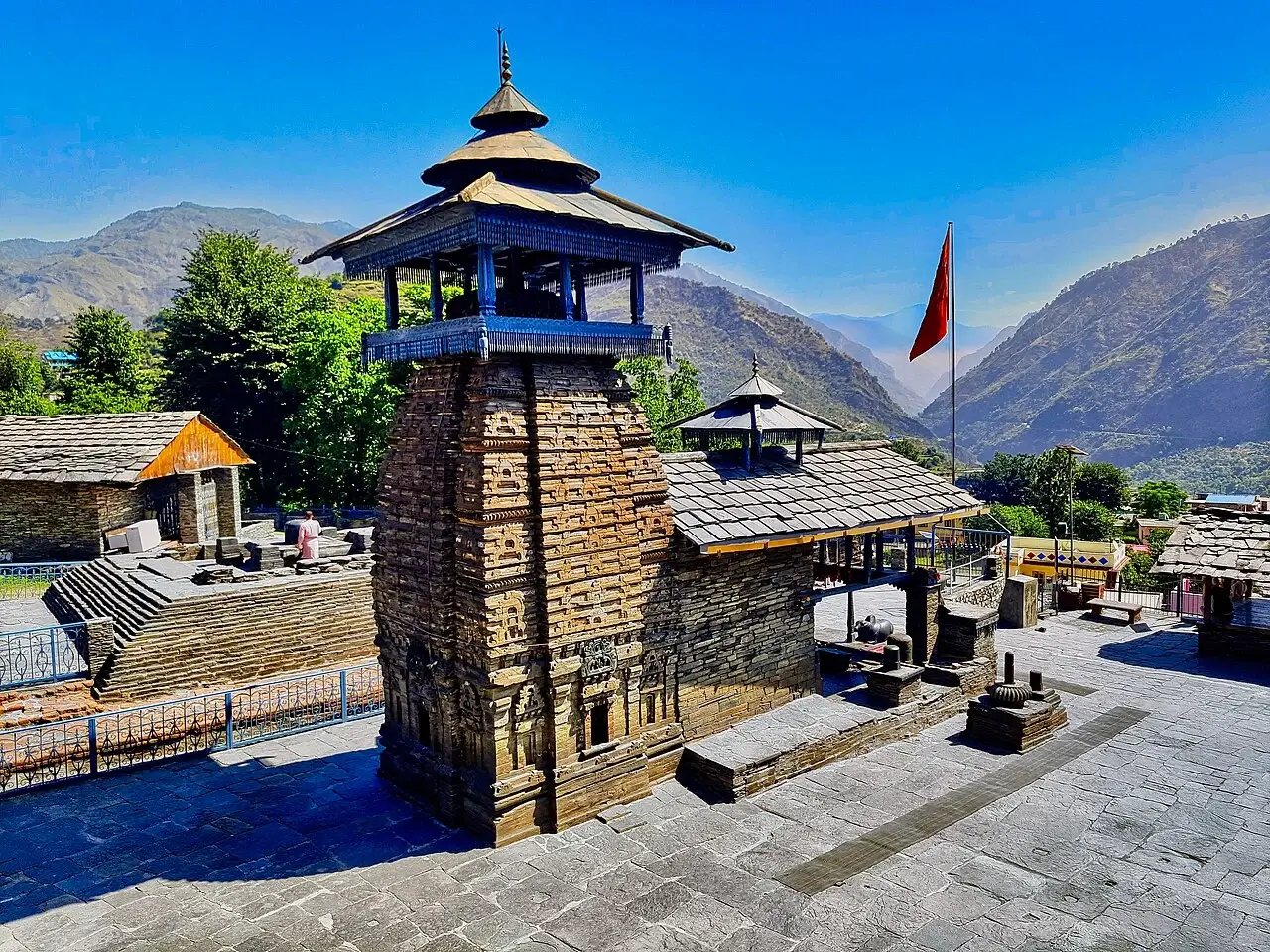
Picture a quiet village on the bank of the Yamuna River. Stone-slab roofs, pine hills all around, and an old Shiva temple standing in the middle. Pour water on its Shivling and the stone starts to shine like a mirror. You can see your own face in it..feels so surreal, right?
This is Lakhamandal Temple in Uttarakhand. Most travellers drive right past it on the way to Yamunotri. That is a pity, because parts of this place are over 1,000 years old, it is linked to the Mahabharata, and it comes with some of the most unusual local stories in the hills.
In this Lakhamandal Temple guide, you will find its history, legends, timings, best time to visit, route and simple travel tips. Let’s start.
Where Is Lakhamandal Temple?
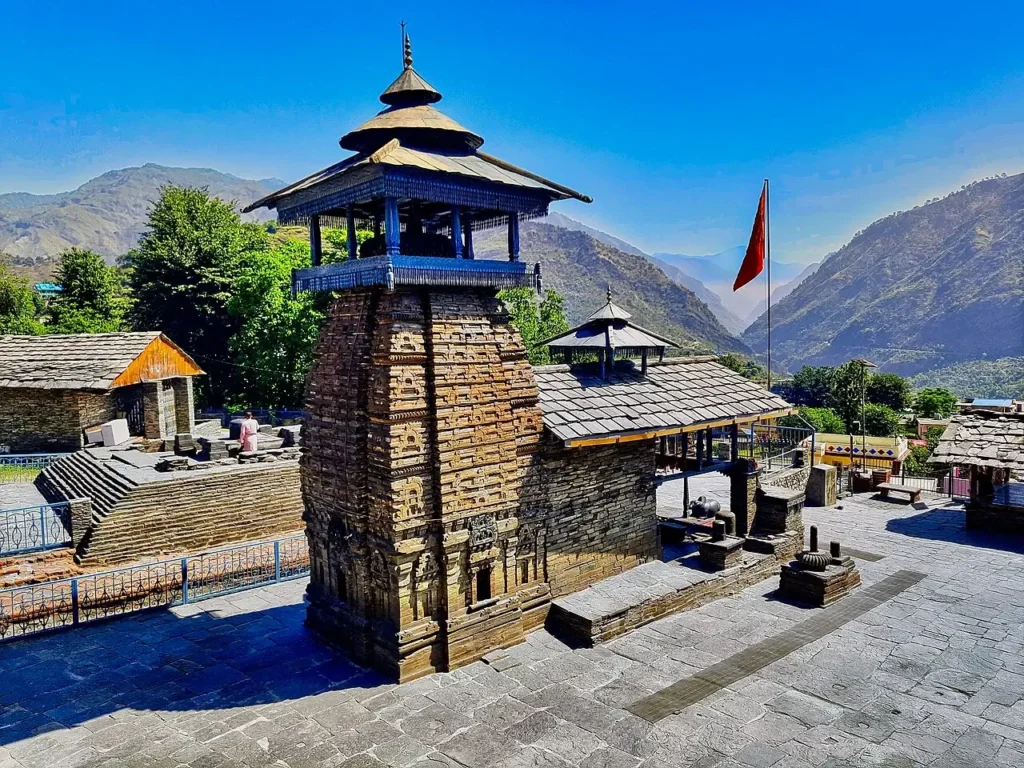
Lakhamandal Temple is in the Jaunsar-Bawar region of Dehradun district, Uttarakhand. It stands beside the Yamuna, on the road that runs from Mussoorie towards Yamunotri.
• Deity: Lord Shiva
• Location: Lakhamandal village, Chakrata tehsil, Dehradun
• Age: The present temple dates to about the 12th-13th century. Older traces go back to the 5th- 8th centuries.
• Style: Nagara style of North Indian temple building
• Main attraction: A graphite Shivling that shines when wet
• Protected by: Archaeological Survey of India (ASI)
• Best time to visit: October to March
What Does the Name Lakhamandal Mean?
“Lakha” means many (think of the word lakh) and “mandal” means temple or lingam. So Lakhamandal means “many temples” or “many Shivlings”.
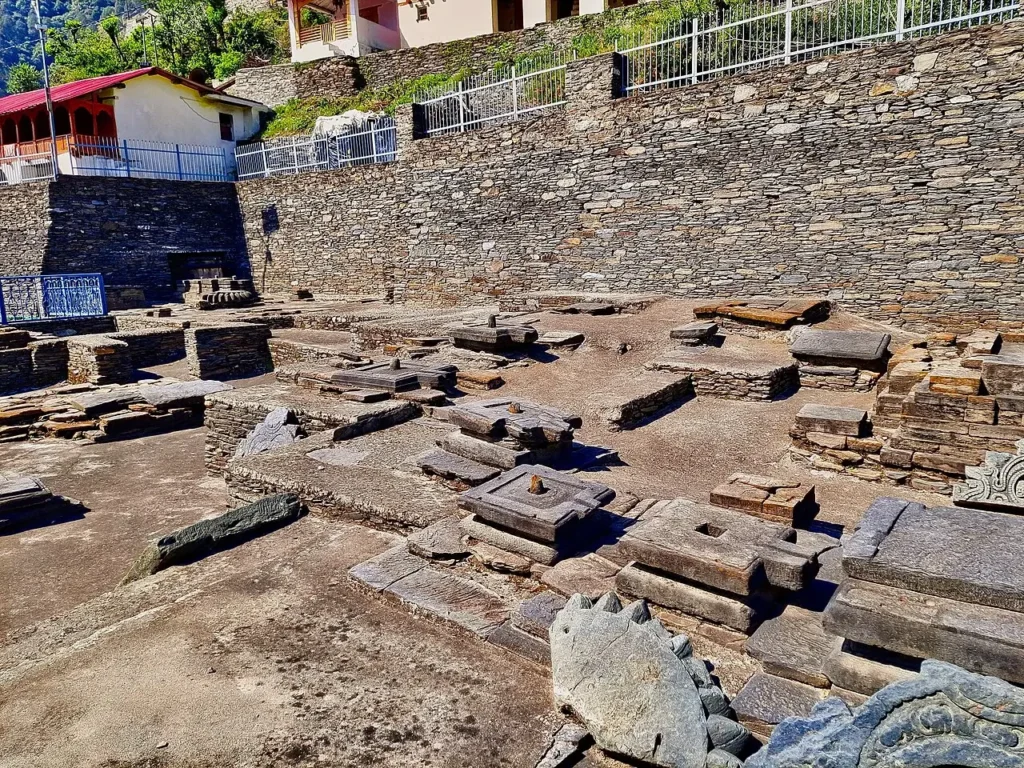
The name is not just talk. Villagers say that years ago, while digging their land to make farming steps, they hit old idols and Shivlings. ASI then dug further and found many carvings and lingams, big and small. Locals believe a lot more is still buried under the village.
Lakhamandal Temple History
The temple you see today is in the Nagara style and ASI dates it to around the 12th or 13th century. But the site is much older.
A 6th-century stone inscription found here says that a princess named Ishwara, from the royal family of Singhpura, built a Shiva temple at Lakhamandal. She did it for the peace of her late husband, Chandragupta, son of the king of Jalandhar. Brick remains under the stone structure show that people were building here as early as the 5th to 8th centuries.
Between 2005 and 2007, ASI cleared buried structures on the southern side of the complex. They found the remains of a small flat-roofed temple from around the 5th or 6th century, a style that is rare in this region.
Today the whole complex is a protected monument, so nobody is allowed to build or break anything here.
The Story of Lakhamandal: Lakshagriha and the Pandavas
Ask any local about Lakhamandal and you will hear the Mahabharata. As the story goes, Duryodhana and the Kauravas built a house of lac, a sticky resin that catches fire very fast, and sent the Pandavas to stay in it. The plan was to burn them alive. The Pandavas found out and escaped through a tunnel. Locals say this very spot is where it happened.
Some villagers add a twist. They say Goddess Shakti saved the Pandavas, which is why both Shiva and Shakti are worshipped here.
Another story says Yudhishthira set up the Shivlings here while the Pandavas were in hiding.
One honest note: many places in India claim to be the Lakshagriha site. At Lakhamandal, the link comes from local belief, not proof. But it is exactly this story that brings people here.
The Graphite Shivling: Why You Can See Your Own Face
The biggest attraction is a large Shivling made of graphite. When water is poured on it during abhishek, the stone shines and shows the faces and surroundings of the people standing around, almost like a mirror.
Locals believe this is the Shivling the Pandavas worshipped. One of the temple priests told a newspaper that the reflection is Shiva’s message that everyone is within him and under his protection. Whatever you believe, it is a moment you will remember. Ask the priest to do the abhishek and look closely.
Danav and Manav: The Two Giant Guards
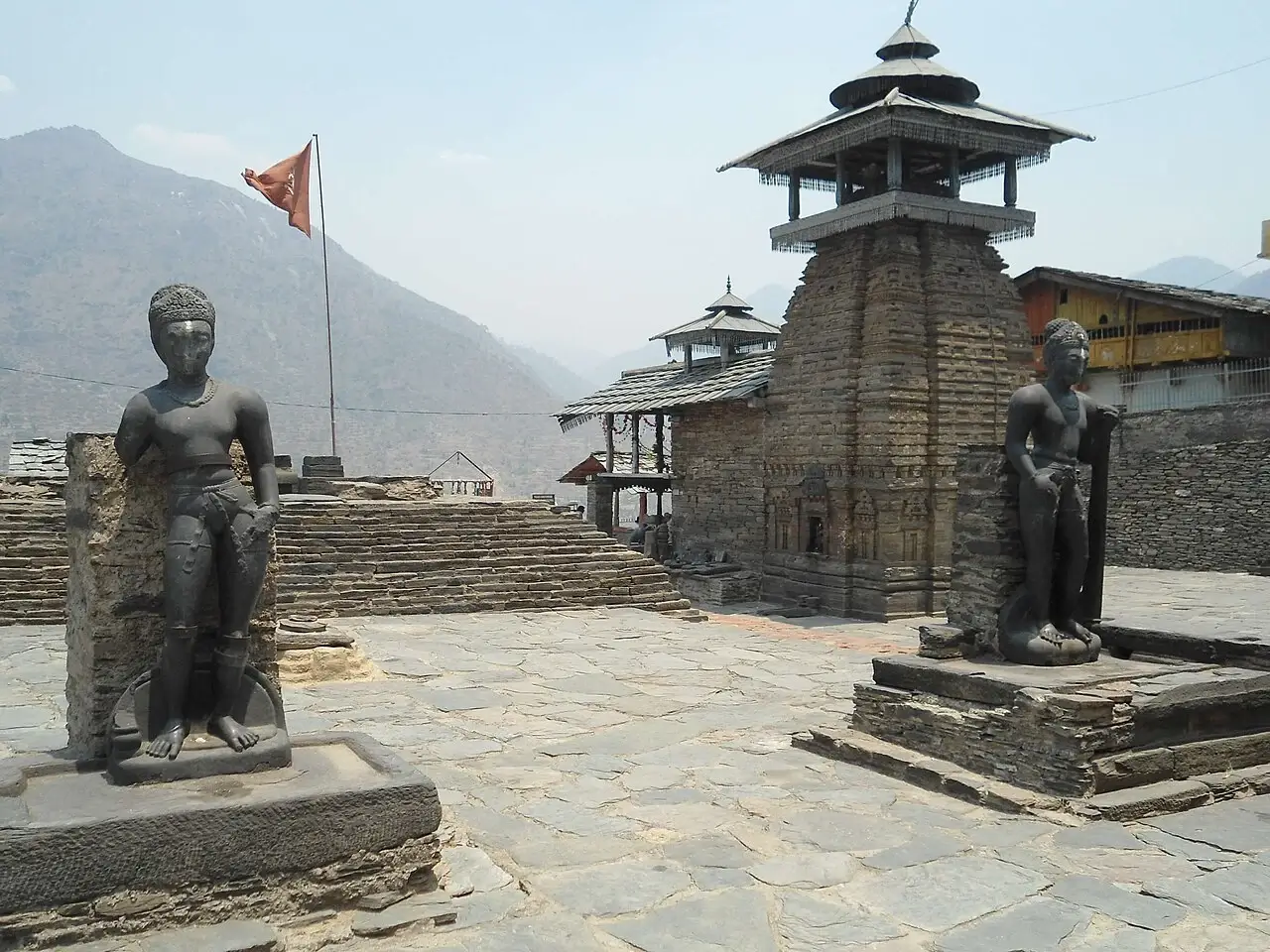
Near the main shrine stand two tall statues, placed like gatekeepers. Locals call them Danav and Manav and some people say they are Bhima and Arjuna.
ASI has a different view. One statue has a worn-out inscription near its base that seems to read “Vijaya”. This hints that the pair may be Jaya and Vijaya, the gatekeepers of Lord Vishnu.
There is also a famous folk belief about these two. It says that if a dead person is placed in front of them and holy water is sprinkled, the person comes alive for a few moments, takes Shiva’s name, drinks Gangajal and then leaves the world in peace. This is a local story that cannot be proved, but you may hear it from people in the area.
Dhundi Odari
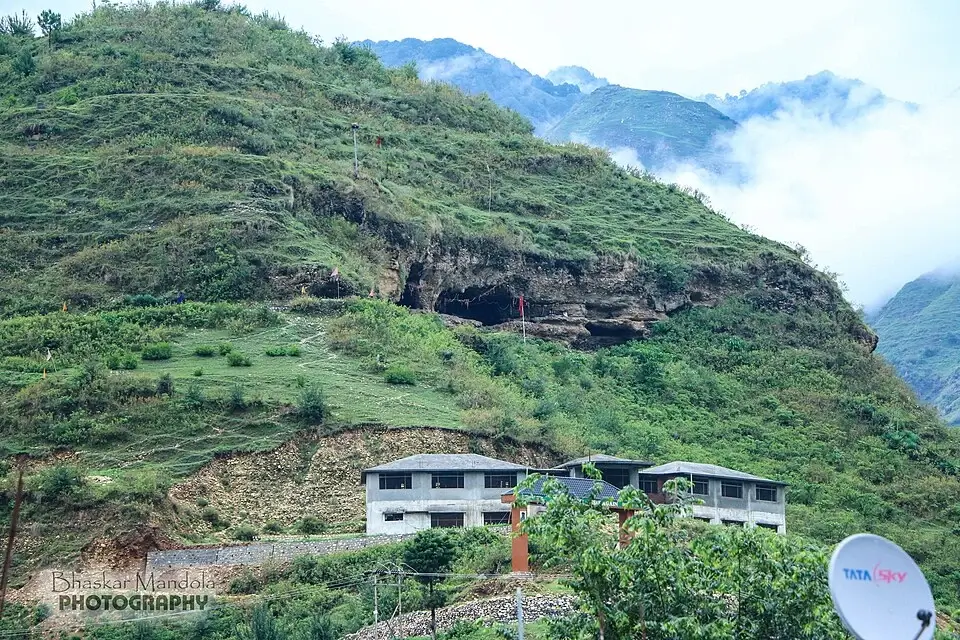
The Misty Cave Near the Temple
In the local Jaunsari language, “dhundi” means misty or foggy and “odari” means cave. Villagers believe the Pandavas hid in this cave to stay safe from Duryodhana.
Cave mouths can be seen on the hill in front of the temple, and that you can explore them with a local guide. Expect darkness and bats. Never go in alone.
Festivals at Lakhamandal
Mahashivratri is the biggest day here. A popular belief says that women who stay awake all night in the temple, chanting Shiva’s name and looking at the Shivling, are blessed with a child. Shravan month (July-August) is holy for Shiva devotees, and Baisakhi in mid-April is also celebrated here. These days get crowded, so reach early if you want a peaceful darshan.
Lakhamandal Temple Timings and Best Time to Visit
Most sources say the temple is open daily from around 6 or 7 AM to 6 PM. Timings can change on festival days, so try to go in the morning.
The best time to visit is October to March, when the sky is clear and the weather is pleasant. September to November is especially good for views. In July and August, the Yamuna looks beautiful, but rain makes the road slippery and landslides can block the way.
How to Reach Lakhamandal Temple
Lakhamandal can be reached only by road. Dehradun is the nearest railway station, and Jolly Grant Airport near Dehradun is the nearest airport.
• Dehradun to Lakhamandal via Mussoorie: about 111 km. You pass Mussoorie and Kempty Falls on the way.
• Dehradun to Lakhamandal via Herbertpur and Vikasnagar: about 125 km. This route skips the Mussoorie rush. Both routes meet at Yamuna Bridge.
• Mussoorie to Lakhamandal: around 60 to 75 km, depending on the source. Plan for 4 hours or a little more from Dehradun. You can hire a taxi or take a bus towards Yamunotri. The last stretch has sharp bends and a drop on one side, so drive in daylight.
Where to Stay Near Lakhamandal
Stay options in the village are basic. Some visitors have stayed in simple guest houses nearby. For more choice, base yourself in Barkot, Chakrata or Mussoorie, or do it as a day trip from Dehradun. Do not expect luxury, but do expect warm hospitality. Travellers often mention how friendly the villagers are.
Places to Visit Near Lakhamandal
• Kempty Falls: A popular waterfall on the Mussoorie-Yamunotri road.
• Mussoorie: A good base for the night before or after your trip.
• Naugaon: Known for views of Bandarpoonch peak.
• Barkot and Yamunotri: Lakhamandal sits on the Yamunotri route. From Janki Chatti, it is about a 6 km trek to the Yamunotri temple.
• Purola and Mori: Pine forests, apple orchards and the gateway to the Tons valley.
• Hanol: The Mahasu Devta Temple, built in Kath-Kuni style on the Tons River bank. It is a long drive from Lakhamandal.
• Chakrata: Tiger Falls, Budher Caves and Deoban forest.
Before You Go: ASI Restoration Work in 2026
In May 2026, news reports said ASI had started conservation work at Lakhamandal. Rainwater has been seeping through the loose joints of the stone roof into the sanctum. To fix this, ASI plans to take the roof apart carefully, number every stone, improve the drainage and put it back in the same order using traditional methods.
We could not find a clear notice online about how this affects darshan. So ask a local driver or the temple priest before you leave, and expect some parts to be covered.
Simple Travel Tips for Lakhamandal Temple
• Start early. Fill fuel and carry cash in Dehradun or Mussoorie.
• Mobile network can be weak in parts of the hills.
• Dress modestly and remove your shoes at the shrine.
• Do not touch or move the old carvings. They are ASI protected.
• Ask before taking photos of people or inside the sanctum.
• Take a local guide for the stories and the caves.
• Keep 1.5 to 2 hours for the temple and village walk
FAQs
Where is Lakhamandal Temple located?
It is in Lakhamandal village, Jaunsar-Bawar region, Dehradun district, Uttarakhand, beside the Yamuna river.
Why is Lakhamandal Temple famous?
For its mirror-like graphite Shivling, the two giant guards Danav and Manav, and its local link to the Lakshagriha story of the Mahabharata.
How far is Lakhamandal from Dehradun?
About 111 km via Mussoorie and about 125 km via Herbertpur and Vikasnagar. It takes around 4 hours.
Is Lakhamandal part of the Char Dham?
No. It is not one of the four Dhams, but it is a popular stop on the way to Yamunotri.
Is Lakhamandal worth visiting?
Yes, if you like history, mythology and quiet places. If you want a big, developed tourist spot, this may feel too simple.
Lakhamandal is not a grand or crowded temple. It is something better. It is a small village where old stones, big stories and a shining Shivling come together by the Yamuna. Whether you believe in the legends or just love old places, it is worth a stop on your next Yamunotri drive.