Somewhere in the pine forests of Uttarakhand, there’s a deity who runs the busiest courtroom in the Himalayas and his evidence locker is made of paper and brass.
At the temples of Golu Devta, devotees don’t just fold their hands and pray. They file. They write letters on plain paper, on legal stamp paper, sometimes in careful legalese and pin them to the temple walls like a celestial notice board. And when the verdict comes through, they return to tie a brass bell in thanks. The result is a sight unlike any other shrine in India: corridors so thickly hung with bells tens of thousands of them, from thimble-sized to huge that sunlight barely reaches the floor, and the whole temple chimes with every mountain breeze.
Golu Devta is Kumaon’s God of Justice (Nyay ka Devta), believed to be an incarnation of Gaur Bhairav, a form of Lord Shiva, who rides a white horse with bow and arrow in hand. The rule here is simple: approach him with a clean conscience and no genuine petition goes unheard.
Two temples draw the vast majority of pilgrims today Chitai, near Almora and Ghorakhal, near Bhowali and while they serve the same god, they offer two very different journeys.
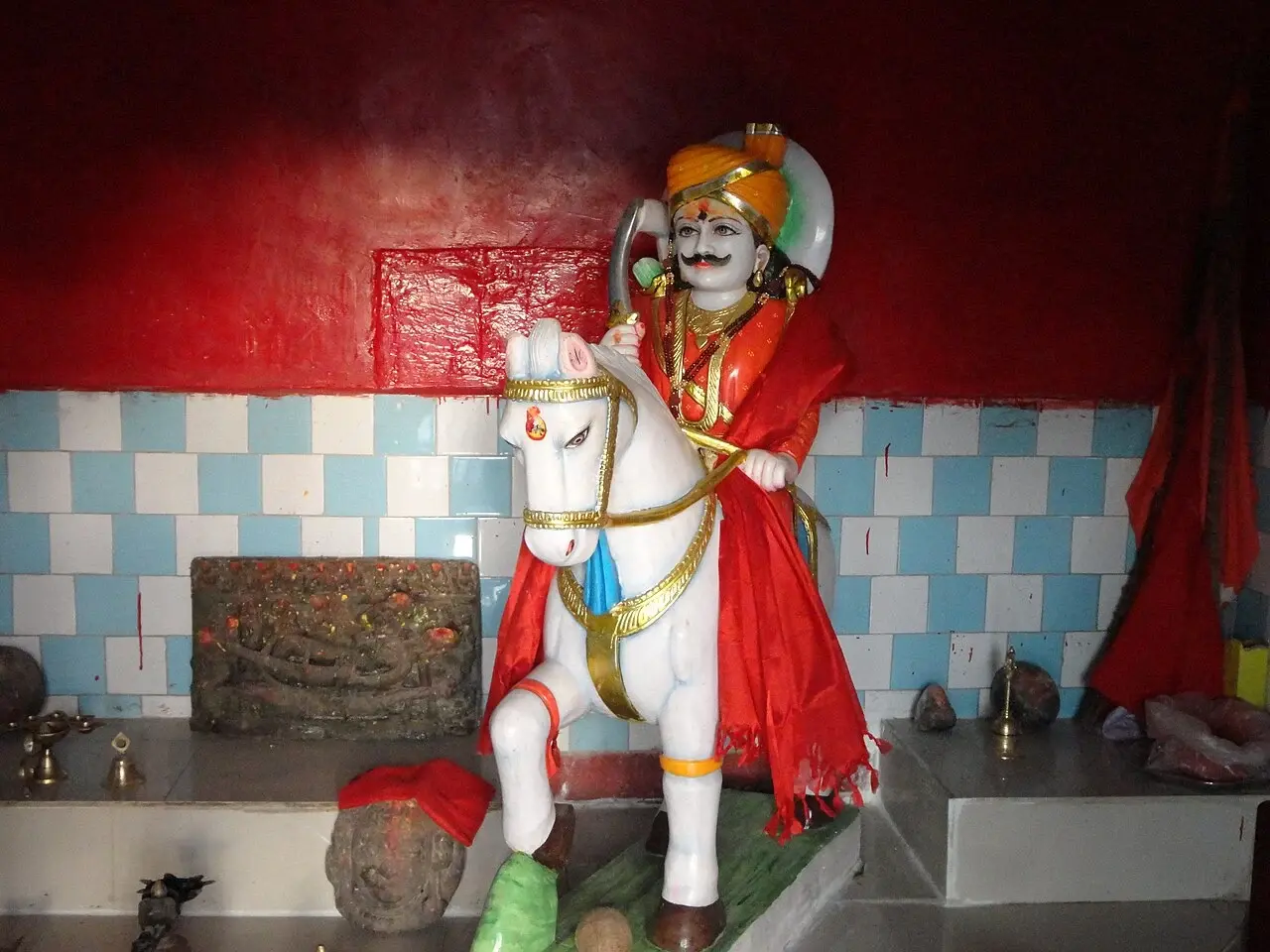
Story of Golu Devta
A Prince in a Wooden Horse
Ask a Kumaoni grandmother who Golu Devta was and you’ll get a story worth retelling. The deity’s roots lie around the 10th century in Champawat, where the most popular legend casts him as the son of King Jhal Rai and Queen Kalinka. Jealous co-wives swapped the newborn prince for a stone and threw him into a river. A fisherman rescued and raised the boy until, at the age of eight, Golu rode up to the royal pond on a wooden horse and made it drink water. When the queens laughed, the boy delivered the line that exposed everything: if a woman can give birth to a stone, a wooden horse can drink water. The king punished the schemers and Golu grew into a ruler famed for one thing above all: incorruptible justice.
Other traditions link him to the Katyuri kings (7th–12th century CE) as a prince or general, or to the Chand dynasty as a warrior martyred in battle.
In his later life, legend says, he took renunciation and attained enlightenment at Chitai and when the Chand capital shifted from Champawat to Almora, Golu appeared in a dream to a Pant Brahmin and asked for a temple to be built there.
Whatever the version, the pattern is the same across the hills: a wronged soul who becomes the eternal guardian of the wronged.
The Ritual: Petitions, Stamp Paper and Bells
This is what makes Golu Devta unique among Indian deities. His shrines function as divine courts and devotees approach them accordingly; some petitions even use the language of the legal system, written on stamp paper like an affidavit filed before a judge.
The exchange works in two acts:
First, the petition. Devotees write their plea, a court case dragging on for years, a land dispute, an illness, an exam, a marriage and hang it in the temple. Reading them is a quietly devastating experience. One aspirant doesn’t ask to clear the IAS; he asks only for the strength to stay away from distractions. A wife writes that doctors are merely human, but You are the greatest doctor in the world please release my husband from his illness. These aren’t prayers. They’re letters to a best friend who happens to be God.
Then, the bell. When the wish is fulfilled, the devotee returns and ties a brass bell with red-gold chunri cloth. This means every single bell at these temples and there are uncountable thousands, represents a prayer that was answered. Few temples in the world wear their track record so visibly.
In deeper Kumaoni tradition, justice is also sought through the Jaagar, a night séance where a Jaagariya sings and drums the deity into a medium (Dangaria) and Golu himself is believed to speak judgment.
Temple One: Chitai Golu Devta, Almora
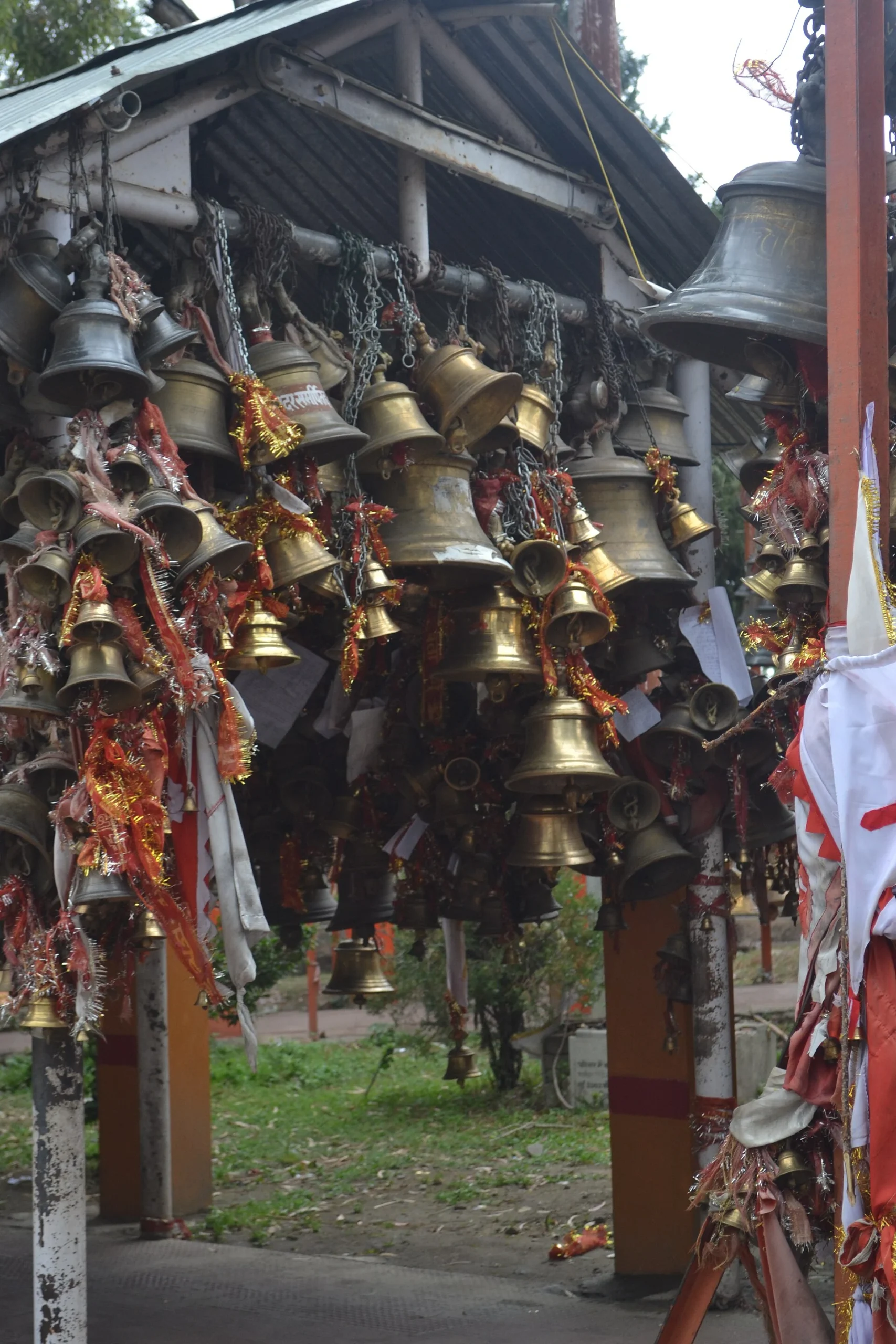
The Temple of a Hundred Thousand Bells
About 8 km from Almora on the road towards Pithoragarh, wrapped in chir pine forest, stands the most famous Golu Devta shrine on earth. Local belief dates it to the 12th century, built by a general of the Chand dynasty and it has been accumulating bells ever since.
The experience begins before the sanctum. Visitors climb a short path from the road carrying trays of flowers and prasad, ringing the great bells hung beneath each red gateway as they pass. Then comes the corridor of bells, a covered passage where brass bells hang in layers upon layers, interwoven with red ribbons and handwritten notes, so dense the passage feels like a tunnel of metal and wishes.
Inside, the air is thick with incense, chanting and drumming; a priest presses yellow and red tilak on foreheads and ties red cord on wrists; monkeys patrol the fences hoping for dropped prasad (hold onto your offerings haha).
The sanctum itself is small, painted bright yellow and orange, with Golu Devta seated on his white horse. The queue switchbacks through the gloom, sequined shawls catching flecks of light between the bells. And then you step out into the open courtyard, deodar shade, benches, families sharing prasad, birdsong and the contrast is its own kind of blessing.
Practical notes: Chitai is crowded at almost every hour of every day. Go early in the morning for a calmer darshan. The temple is an easy add-on to any Almora or Jageshwar Dham trip and bells, chunri and puja items are sold by vendors at the entrance.
Temple Two: Ghorakhal Golu Devta, Bhowali
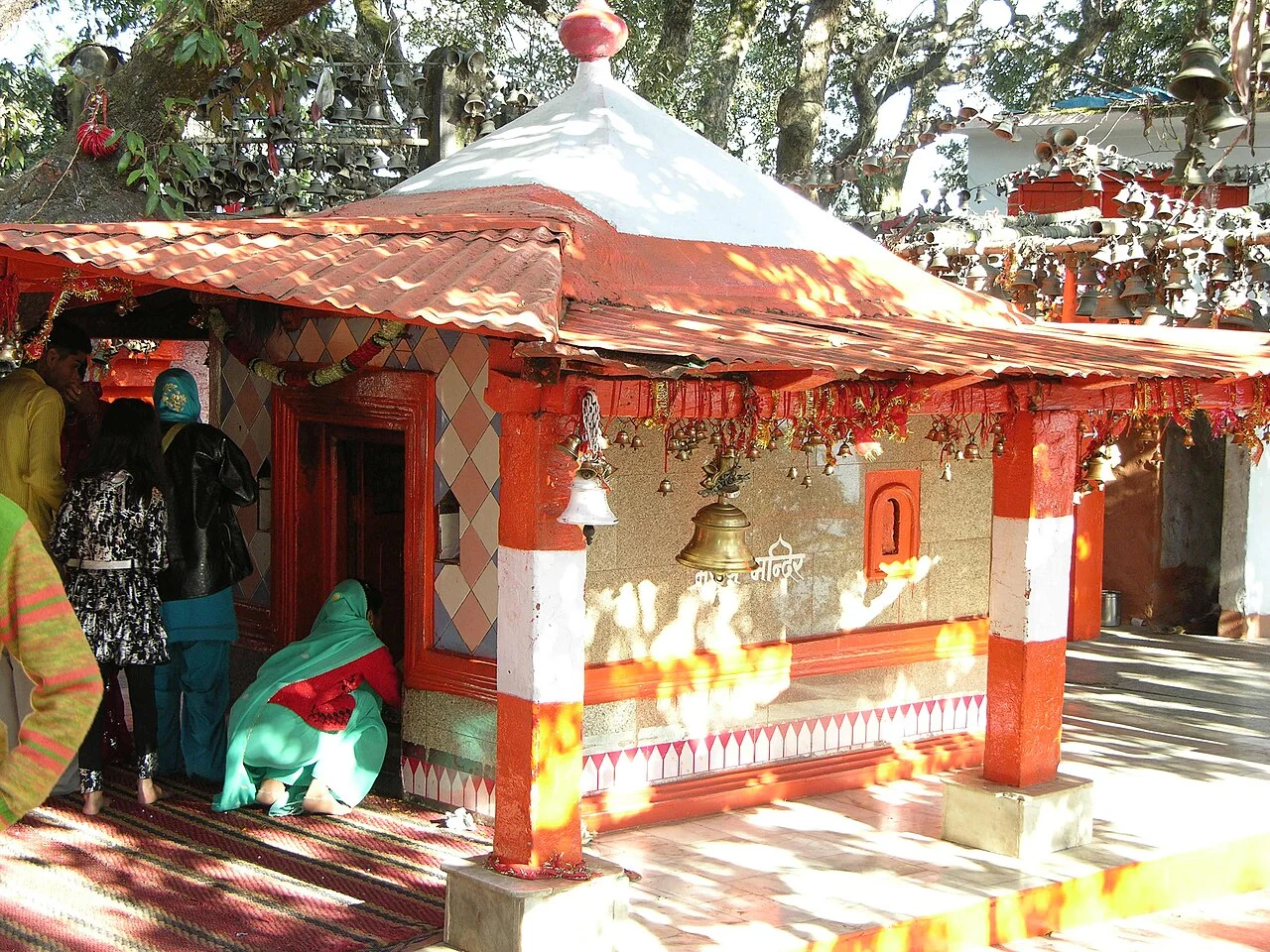
If Chitai is the grand courtroom, Ghorakhal is the hilltop chamber, smaller, breezier and blessed with one of the finest temple views in Kumaon.
Located atop Ghorakhal hill at around 2,000 metres, roughly 4 km from Bhowali and 15–16 km from Nainital, this temple looks out over the blue sprawl of Bhimtal Lake and the surrounding villages. The approach is a climb of about 57 steps marble-floored, barefoot and bracing in winter up to a compact complex that includes the main Golu Devta shrine along with temples of Shri Ram, Kali Mata and Bhairav.
The bells are here too, hundreds of them and when they ring together in the hill wind the effect is astonishing. The crowd is local and familial: newborn babies brought for their first blessing, newlywed couples arriving straight from their weddings, families performing a round of puja across all the shrines. On auspicious dates New Year’s Day above all expect a wait of an hour or more. Afterwards, the ritual continues at the tea stall near the temple, over chai and chowmein with the lake glittering below.
Two bonuses for travellers: the temple sits next to the gates of the prestigious Sainik School Ghorakhal and it lies barely 5 km from Kainchi Dham making Ghorakhal and the Neem Karoli Baba ashram a natural same-day pairing.
Budget travellers take note: local KMOU buses from Haldwani/Kathgodam to Bhowali cost a fraction of tourist-season taxis and the 3 km walk back down to Bhowali through the fog is half the fun.
How to Reach
Chitai (Almora): Nearest railhead is Kathgodam (~90 km) buses and shared taxis run from Kathgodam/Haldwani to Almora, and the temple is a short taxi or shared-jeep ride (~8 km) from Almora town on the Pithoragarh road. From Delhi, overnight buses and trains to Kathgodam make this an easy weekend trip.
Ghorakhal (Bhowali): Nearest railhead Kathgodam (~36 km). From Kathgodam, buses or shared taxis to Bhowali (~2–2.5 hrs in season traffic), then a 15–20 minute taxi up to the temple. It’s 15–16 km from Nainital and 9 km from Bhimtal taxis are easily available from both.
Best Time to Visit
Both temples welcome pilgrims year-round. March to June and September to November offer the clearest skies and best views October–November is particularly sharp for the Bhimtal panorama from Ghorakhal.
Winters (December–February) are cold but deeply atmospheric, with fog rolling through the pines; wear warm layers, especially for the barefoot marble at Ghorakhal.
Monsoon (July–August) brings landslide risk on Kumaon roads.
Temple festival days and 1 January draw huge local crowds, wonderful for atmosphere, slow for darshan. For quiet, choose a weekday morning.
Nearby Places to Explore
From Chitai / Almora:
- Almora’s old bazaar
- Bright End Corner
- Kasar Devi temple
- Jageshwar Dham
- Binsar Wildlife Sanctuary
- The original Golu shrine at Champawat
From Ghorakhal / Bhowali:
- Kainchi Dham Ashram
- Bhimtal (9 km)
- The seven lakes of Sattal
- Naukuchiatal for paragliding
- Nainital (16 km)
- cliff-edge views of Mukteshwar
Two Temples, One Verdict
Chitai and Ghorakhal serve the same god, but they speak in different registers. Chitai overwhelms a hundred thousand answered prayers pressing in from every side, justice rendered at industrial scale. Ghorakhal uplifts a family shrine on a windy hilltop where the lake below does half the healing. The wise pilgrim visits both: file your petition in the forest, then climb to the ridge and leave it to the wind.
Just remember the one condition that every Kumaoni will tell you, and that no court on earth can enforce: ask with a clean heart.
Golu Devta, they say, reads the petitioner before he reads the petition.