
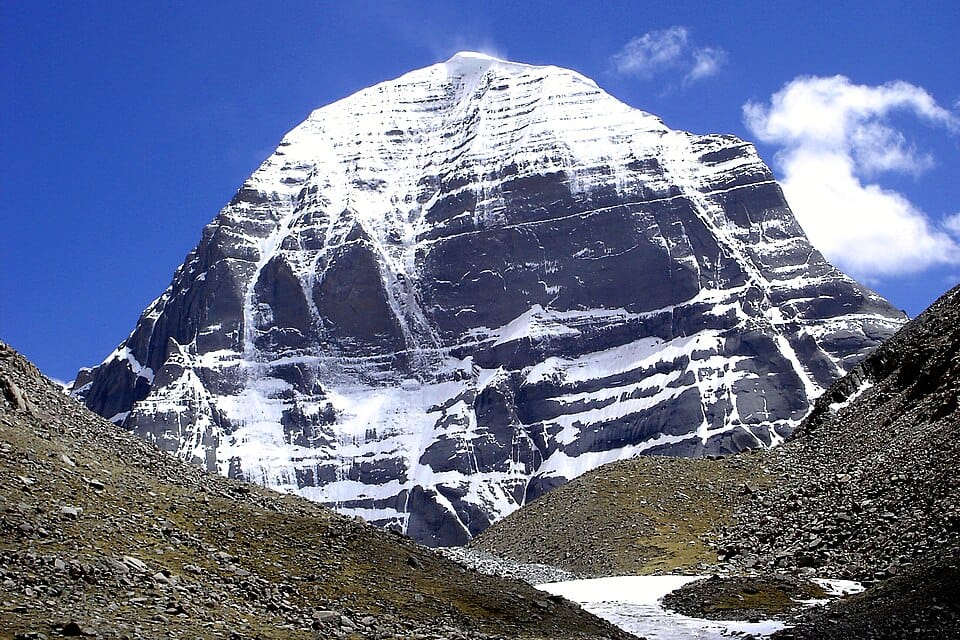
India is home to countless sacred pilgrimages, each offering a unique blend of spirituality, culture, and physical endurance. Among them, the Kailash Mansarovar Yatra is widely regarded as the most challenging pilgrimage associated with India. It is not merely a journey across mountains but a profound test of faith, resilience, and determination. Every year, thousands of devotees dream of undertaking this sacred expedition despite its extreme altitude, harsh weather, and demanding terrain.
A Sacred Destination
Mount Kailash, standing at approximately 6,638 meters (21,778 feet), is located in the Tibet Autonomous Region of China. Although the mountain lies outside India’s borders, the pilgrimage has been an integral part of Indian spiritual traditions for thousands of years. Hindus believe Mount Kailash is the divine abode of Lord Shiva and Goddess Parvati. Buddhists revere it as the home of Demchok (Chakrasamvara), while Jains believe it is where the first Tirthankara, Rishabhadeva, attained liberation. Followers of the Bon religion also consider it one of their holiest sites.
Nearby lies Lake Mansarovar, one of the world’s highest freshwater lakes at an elevation of around 4,590 meters (15,060 feet). Pilgrims believe that taking a holy dip in its pristine waters washes away sins and brings spiritual purification.
Why Is It the Most Difficult Yatra?
Several factors make the Kailash Mansarovar Yatra one of the toughest pilgrimages in the world.
1. Extreme Altitude
The pilgrimage takes place at elevations ranging between 4,500 and 5,600 meters. At such heights, oxygen levels are significantly lower than at sea level, making breathing difficult. Many pilgrims experience symptoms of Acute Mountain Sickness (AMS), including headaches, dizziness, nausea, and fatigue.
2. Challenging Terrain
The journey involves long treks through rocky paths, steep ascents, glaciers, river crossings, and mountain passes. One of the toughest sections is crossing the Dolma La Pass, which rises to about 5,630 meters (18,471 feet). The climb demands exceptional physical and mental endurance.
3. Unpredictable Weather
Weather conditions change rapidly in the Himalayas. Pilgrims may experience bright sunshine, snowfall, freezing winds, and rain—all within the same day. Temperatures can fall well below freezing, especially during the night.
4. Limited Medical Facilities
Since much of the route passes through remote mountainous regions, access to advanced medical care is limited. Pilgrims must be physically fit and medically cleared before beginning the journey.
5. Mental Strength
The Yatra is not just physically exhausting—it also demands immense mental resilience. Walking for several days in thin air while coping with fatigue, cold, and uncertainty requires extraordinary determination.
The Spiritual Significance
Despite its hardships, devotees believe every step toward Mount Kailash brings them closer to divine blessings. Many describe the pilgrimage as a life-changing spiritual experience. The silence of the mountains, the beauty of Lake Mansarovar, and the sight of the majestic peak inspire deep meditation and self-reflection.
One of the central rituals is the Kailash Parikrama, a circumambulation of Mount Kailash covering approximately 52 kilometers. Completing this sacred circuit is believed to erase the sins of a lifetime, while many traditions hold that multiple circumambulations bring even greater spiritual merit.
Preparation for the Journey
Because of its difficulty, proper preparation is essential.
Pilgrims should:
- Undergo a comprehensive medical examination.
- Build cardiovascular endurance through walking, trekking, cycling, or running.
- Practice breathing exercises to improve lung capacity.
- Carry suitable winter clothing, waterproof gear, trekking shoes, and essential medicines.
- Follow the guidance of experienced tour operators and medical professionals.
- Acclimatize gradually to high altitude.
Other Challenging Pilgrimages in India
Although the Kailash Mansarovar Yatra is often considered the most demanding, India also has several other difficult pilgrimages:
- Amarnath Yatra (Jammu & Kashmir): A high-altitude trek to the sacred ice Shiva Lingam through rugged Himalayan terrain.
- Hemkund Sahib (Uttarakhand): A steep climb to one of the world’s highest Sikh shrines at over 4,300 meters.
- Adi Kailash Yatra (Uttarakhand): A remote Himalayan pilgrimage requiring long drives and mountain trekking.
- Manimahesh Yatra (Himachal Pradesh): A demanding trek to the sacred Manimahesh Lake beneath the Manimahesh Kailash Peak.
Conclusion
The Kailash Mansarovar Yatra stands as the ultimate pilgrimage for countless devotees because it combines profound spiritual significance with extraordinary physical and mental challenges. It is not simply a journey to a sacred mountain—it is a journey inward, testing courage, patience, humility, and unwavering faith. Those who complete the pilgrimage often return with memories that last a lifetime, describing the experience as one of the most transformative chapters of their spiritual lives.
For many, reaching Mount Kailash is not about conquering nature but surrendering to it. In the towering Himalayas, where every breath is precious and every step requires determination, pilgrims discover that the greatest reward is not merely arriving at the destination—it is the transformation that occurs along the way.